
Perfumes are full of urban legends: where to apply them, how long they last, whether they have a "gender" or season. Let's put the myths aside and keep what matters: how to choose, apply, and store perfume correctly to enjoy it to the fullest.
Myth 1 — Perfume lasts longer on clothes
Perfume is designed to evolve on the skin, in contact with body heat: top notes → middle notes → base notes. On clothes, the scent can remain flatter or even alter, and some essences can stain delicate fabrics.


Myth 2 — Rubbing wrists intensifies the perfume
Rubbing generates heat and friction that can destroy top notes. The result: weak projection and shorter perfume life.
Myth 3 — An expensive perfume is automatically better
Price can reflect packaging, marketing, or rare ingredients, but it doesn't guarantee that it suits you or performs well on your skin.


Myth 4 — Storage doesn't matter
Heat, light, and humidity degrade perfume. The bathroom or sunny windowsill are places to avoid.
Myth 5 — It smells the same on everyone
Skin chemistry (pH, hydration, diet) changes perception. The same perfume can be different on friends versus on you.


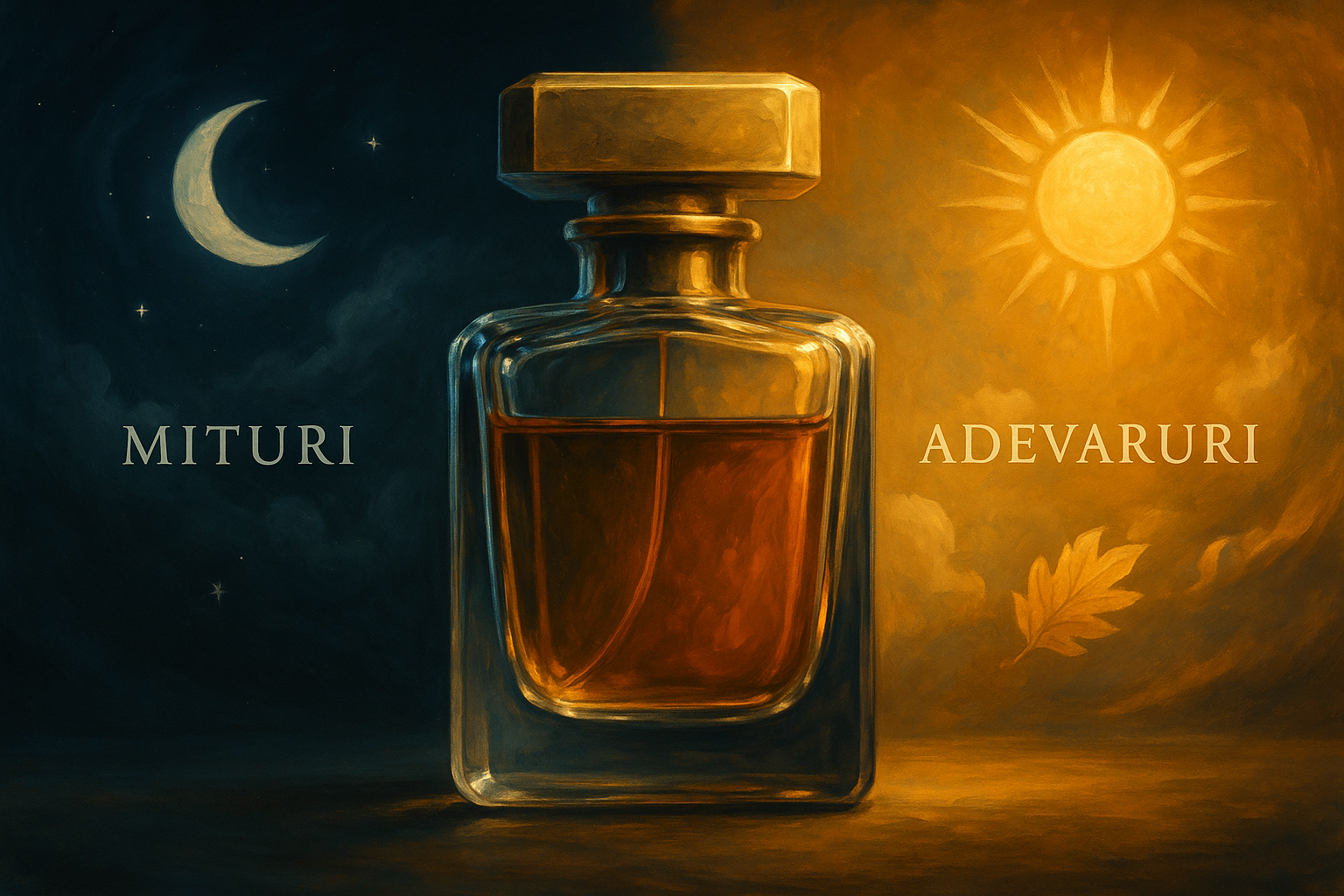
Myth 6 — There are strictly "day" or "evening" perfumes
These are just conventions. Wear what you like, dose intelligently: more discreetly at the office, more generously in the evening.
Myth 7 — "Winter" scents are not worn in summer (and vice versa)
You can wear anything anytime; heat amplifies diffusion, cold tempers it. Adjust the number of sprays and you're good.

Bonus — How to store your perfumes correctly
- Store at 15–22°C, dry, away from sunlight (drawer/dressing room).
- Keep the cap on and the bottle tightly closed after each use.
- Do not shake and avoid frequent transfers to other containers.
- Use in rotation — "forgotten" perfumes oxidize faster.
Comparative table: concentrations & characteristics
Choose the concentration according to your style and context. Below, an overview of typical behavior:
| Type | Typical Concentration | Longevity | Projection | Suitable Context |
|---|---|---|---|---|
| EDT Eau de Toilette | ~5–12% | 2–5 hours | Light → medium | Day, office, warm climates, "fresh" without overwhelming |
| EDP Eau de Parfum | ~12–20% | 4–8 hours | Medium → good | Day & evening, balance between presence and comfort |
| PERFUME Extrait | ~20–40%+ | 8–12h+ | From intimate to pronounced | Evening, events, cold season, small dose during the day |
*Values are indicative; performance varies depending on skin, climate, and the specific composition of the perfume.
Frequently Asked Questions
Why can't I smell my perfume after an hour? +
Most likely it's olfactory habituation: your nose has adapted. Ask someone nearby — often the perfume is still noticeable.
Where should I apply it to make it last decently, without overdoing it? +
2–3 sprays on pulse points (neck, wrists, behind the ears) are usually sufficient. In summer, reduce the dose; in winter, you can slightly increase it.
Can I combine perfumes ("layering")? +
Yes, but with tact: combine a fresh citrus with a light amber or a floral with a subtle woody scent. Avoid clashing mixes.
Does perfume go bad over time? +
Yes, if exposed to light, heat, and air. Proper storage prolongs its life; signs of alteration include color change and a pungent note.
No myths, just clear thinking: choose what you like, dose intelligently, and store correctly. The right perfume is one that represents you.
Want to explore the world of aromas? Start here: Perfume Collection.


